By Cameron Wilson · Published 2026-11-16 · As of 2026-11-16
Sellers aren't moving much on price. They're moving on everything else.
Mid-November MLS numbers and what I'm seeing in real deals: buyers are picky, sellers are flexible on concessions, and the gap between first price and final price is still wide.
An agent on my Monday call had three showings on her listing last week. Every buyer said the same thing: it's priced well. None of them wrote an offer.
The house was fine. It just wasn't the one. It sits on a cul-de-sac where the homes are close together, and these buyers wanted more space.
I think that's the market right now in one listing. Price gets people to the door. The house has to do the rest. And when a deal does come together, the flexibility is showing up somewhere you might not expect.
Buyers are out there, and they're picky
Three showings a week is my rule of thumb for a listing. If you're getting three, the price is right and the marketing is working. People see it online and have no reason not to go look. Even one a week tells you you're in the range.
But a showing isn't an offer. When there are a lot of homes to compare, buyers don't pick the cheaper house that doesn't fit. Nobody walks through two homes and says, "This one's smaller and not as nice, but it's a little cheaper, so let's buy it." It has to fit what they want.
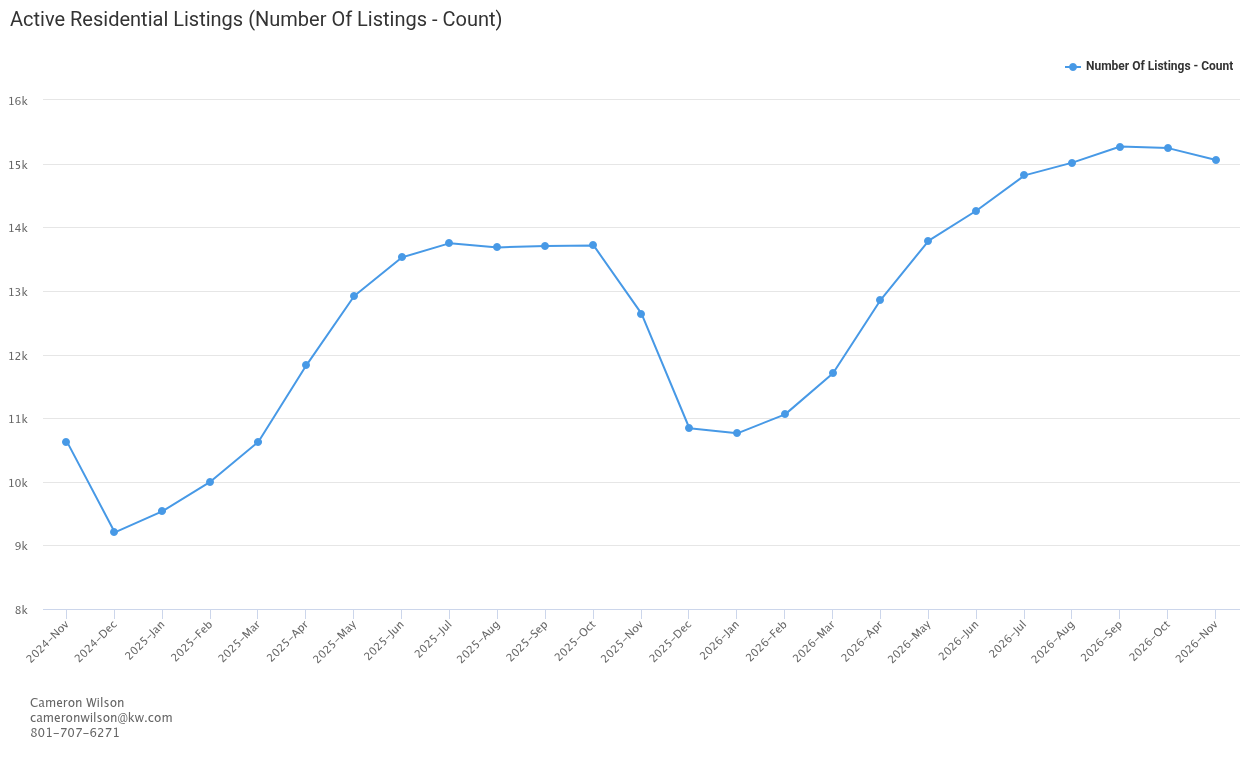
There are plenty of homes to compare. The number of active listings in the UtahRealEstate.com numbers I pulled up Monday morning has stayed high since September. November is down only a little, roughly 190 fewer than October so far.
Homes still sell below their first price
The average home that closed so far this month sold for around 94.5% of its original list price. That's what it originally listed for compared with what it sold for, so it includes any price cuts along the way, not just negotiation.
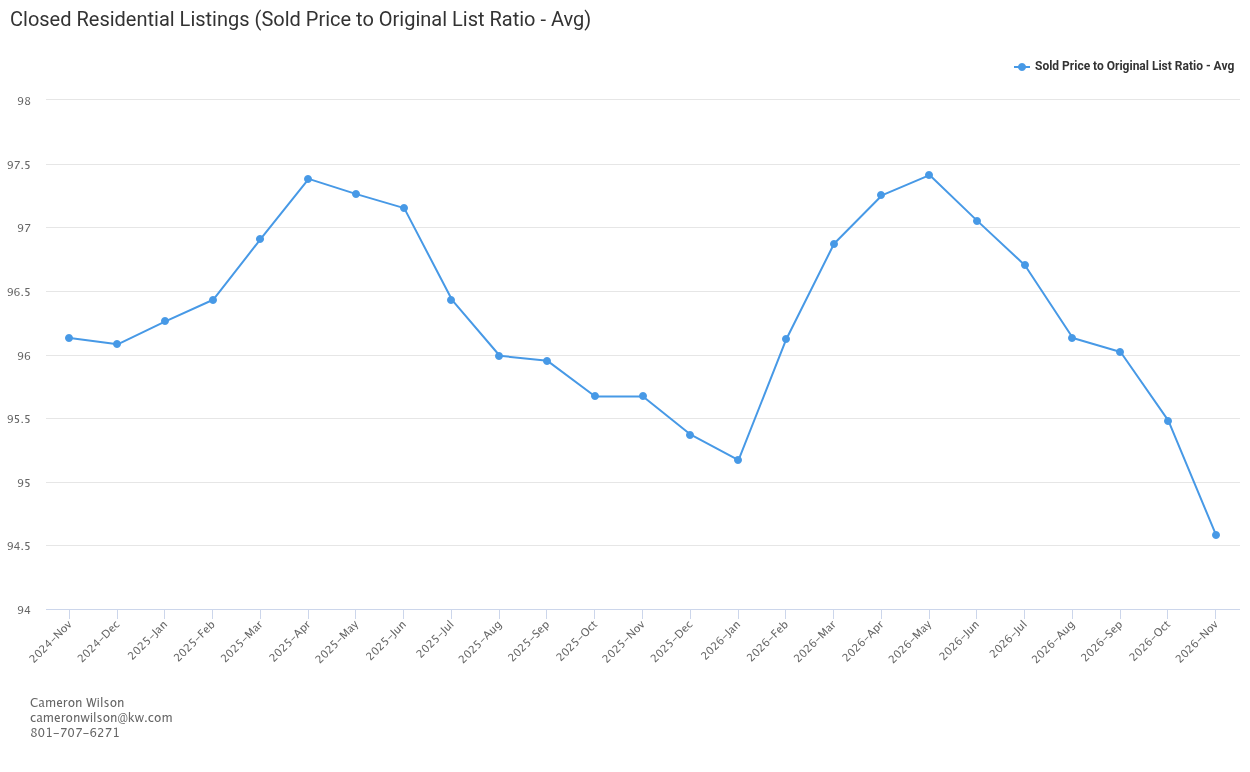
That ratio usually slides through the winter. People list high in the summer, don't get it, and come down. Last year it kept falling for two more months after November before it turned back up.
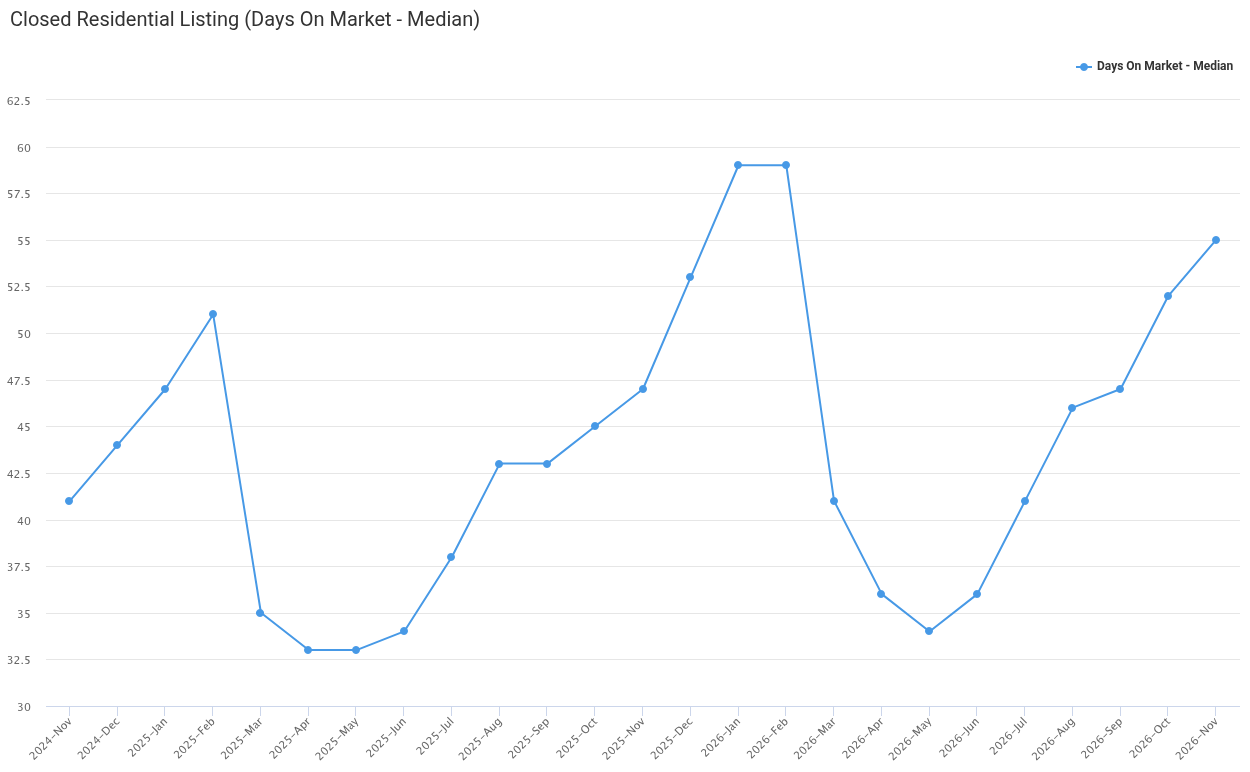
Median days on market is 55, up from 52 in October, and it's been ticking up since about May. Last year it kept climbing into February before it dropped, so I'd expect homes to keep taking a little longer through the winter. That's a median, and November is a partial month, so it'll move.
Where sellers are bending: concessions
Here's what surprised me. I feel like sellers are a lot more open to making things work lately. Not always on price. On everything else.
The agent with the cul-de-sac listing has a buyer under contract on a different home. Those sellers didn't want to drop the price much. They did agree to $25,000 in concessions so the buyers could buy down their interest rate.
On a home I just closed, the numbers stopped working. The price was too high and we didn't have enough concessions for my buyers. I told the other agent we might have to cancel. He asked what it would take, and it came down to $10,000 more. He went to his sellers and got it. The home appraised $10,000 above our contract price, and we had $20,000 in concessions to buy down the rate.
That's the pattern I'm watching. A seller who won't take $25,000 off the price may still put $25,000 toward your loan.
If you're buying: ask about the payment, not just the price
Rates are still a little over 7% on a 30-year fixed, even after four weeks of small declines. That's why concessions matter so much right now. Money toward a rate buydown can change your monthly payment more than the same money off the price.
That's also why I'd want you working with a great loan officer, not one who just quotes the rate and tells you what you don't qualify for. A couple of weeks ago I helped a buyer get a 4.75% rate. They used an adjustable-rate mortgage, fixed for the first several years, and put all their concessions toward buying it down. After the fixed period, that kind of loan can adjust up to half a percent every six months, and it had to line up with a specific loan program, closing costs and a down payment. It isn't for everyone. But it's worth the conversation.
On price, the 94.5% ratio is a useful starting point. On average, homes are closing about 5% below where they first listed. If you're approved to around $500,000, you could look at homes that first listed around $525,000 and see what an offer near $500,000 does. Not every seller is ready to hear that number. That ratio is an average, and it's a lagging one.
If you're selling: win the showing, then win the comparison
The price has to get you the showings, and the house has to beat the other homes buyers saw that week. With this many listings, you need to stand out online and then feel like "this is the one" in person.
If three showings a week turn into compliments but no offers, it may not be the price. Some things you can't change, like a lot on a tight cul-de-sac. So think about what you can offer instead. Help with a rate buydown can keep a deal together when the price can't move.
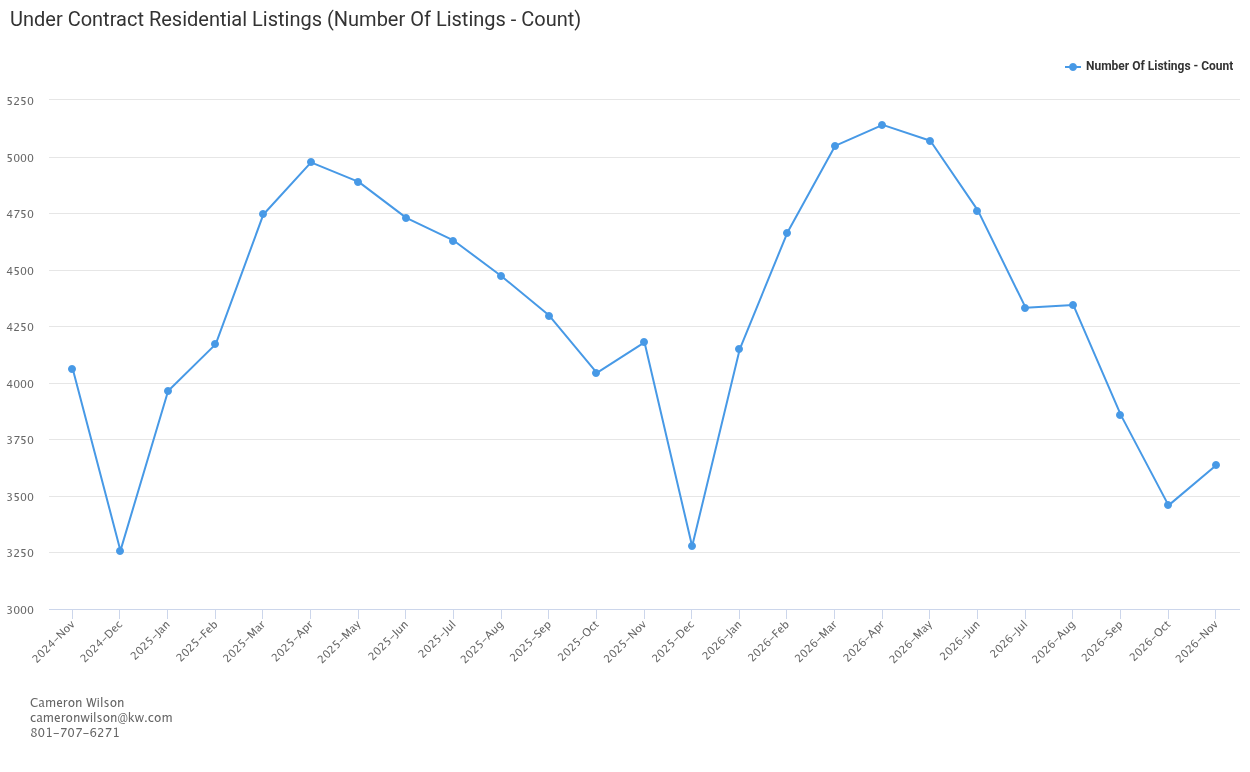
And timing matters. December is usually the slowest month for homes going under contract, and January usually pops right back up. A lot of listings expire on December 31, so January is often when the number of homes for sale is at its low point. If you're not in a hurry, talking now, getting the house ready in December and listing in January is a solid plan for a lot of people.
What I'm watching
The number of homes going under contract this month is up roughly 175 from October, about the same as the drop in listings. Maybe those are the same homes finally selling. It's only mid-month, so I'll watch whether it holds.
These are broad MLS numbers, not your neighborhood. Houses are selling every day, and the deals are there if the house and the terms fit.