The essential lesson
What was taught
Strong buyer agents work one decision ahead. They prepare the client for what comes next before urgency, emotion, or a deadline makes the decision harder.
This session felt different from most buyer training because the speakers described the actual mechanics of their businesses: response time, intake forms, discovery questions, tour size, commitment language, offer preparation, inspection expectations, and long-term nurture. The common thread was foreshadowing. Buyers who are surprised tend to freeze. Buyers who know what may happen next can make a clearer decision.
The useful parts, explained
Session notes
The four phases give the agent a map
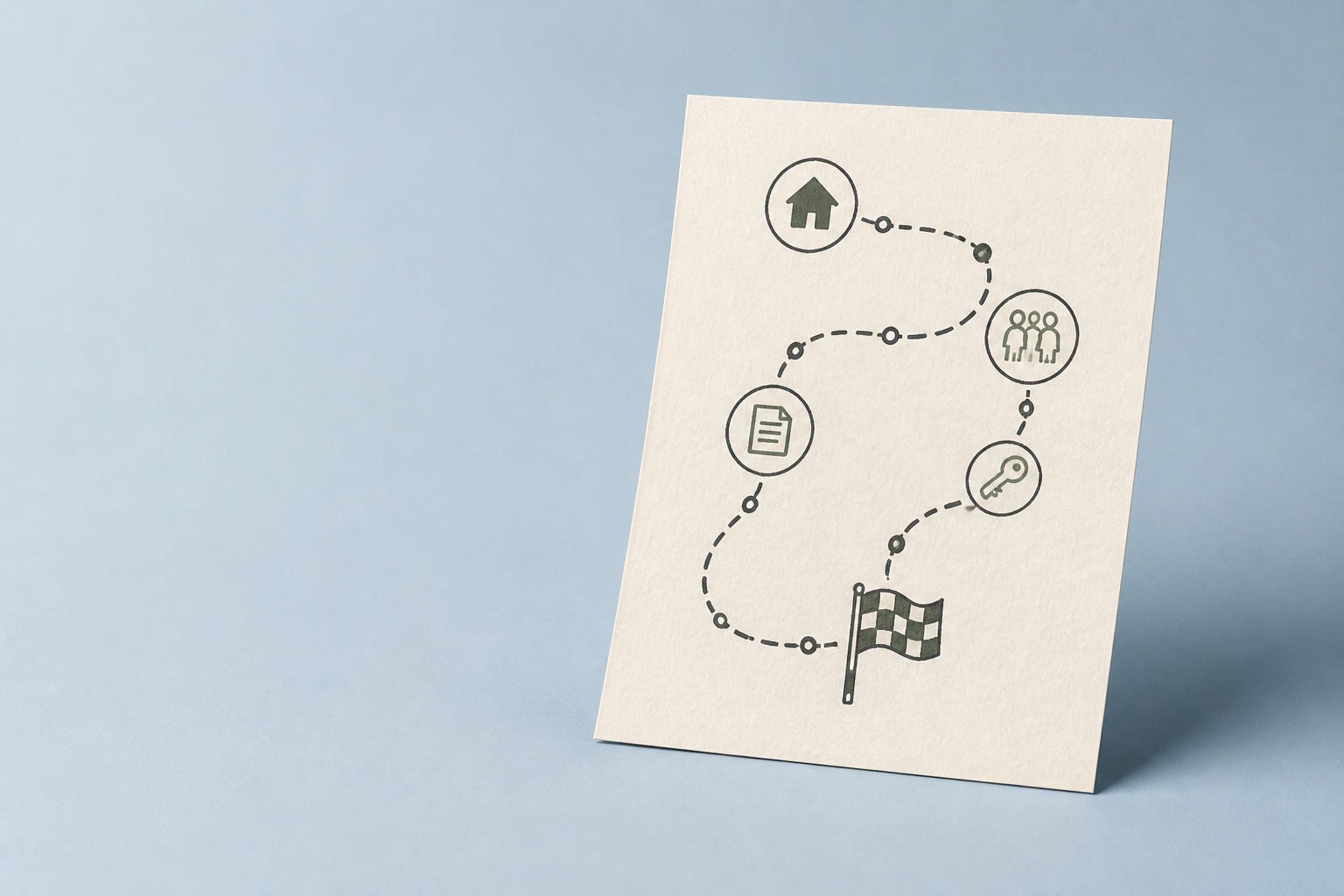
Jason Mitchell divided the buy side into four phases: welcome and discovery, tour and commitment, escrow, and close. His strongest point was that the agent should be talking about phase two while still in phase one, and preparing the buyer for phase three before phase two ends.
- Welcome and discovery: understand the life change before discussing inventory.
- Tour and commitment: help the buyer compare, recognize fit, and decide what deserves action.
- Escrow: prepare for inspections, appraisal, deadlines, and negotiation before they become surprises.
- Close: make the final steps visible so the buyer never has to guess who owns what.
Speed and preparation start before the consultation
One panelist described calling a new referral within minutes, then using a roughly eight-question intake that takes about 60 seconds and sends the answers into the CRM. The point was not to replace discovery with a form. It was to avoid wasting the discovery call on information the buyer could provide beforehand.
- Train past clients to make referrals through a group text instead of only passing along your number.
- Respond while the introduction is still warm.
- Ask a short set of questions about timing, payment comfort, preapproval, location, and the move itself.
- Review the answers before the discovery call so the conversation can begin at a deeper level.
Discovery is about their life—not merely the house
Jason’s discovery questions covered children, work, commute, current housing, travel, and lifestyle. He wanted information that would become useful later on tour. When buyers liked a house, he stopped repeating obvious features and connected the home to the life they had described.
- Ask what is changing in their life and why that creates a housing decision now.
- Learn who else is affected and what daily life needs to improve.
- Listen for the non-obvious value: school route, commute, family proximity, outdoor space, or flexibility.
- Use what the buyer told you to help them evaluate fit—not to talk them into your favorite house.
Set up the tour before anyone gets in the car
Jason asked buyers to choose their best five or six homes instead of touring 12, 15, or 20 properties that blur together. Then he planted the commitment seed: if the right house appears, the market may require action. That conversation happens before the buyer is standing in a kitchen trying to make an emotional decision.
- Send a curated set, then let the buyer choose the homes that deserve a tour.
- Limit the day so the houses remain distinct enough to compare.
- Agree in advance on what would make a home worth pursuing.
- Explain what acting could mean: gathering terms, calling the listing agent, reviewing numbers, or preparing an offer—not automatic commitment.
Foreshadow the risks before the contract makes them scary
Before an offer was accepted, Jason was already explaining that a seller might counter, every inspection report contains issues, and an appraisal problem has a process. His rule was to set those expectations before the buyer sees a long inspection report or hears that the value came in low—because during the problem is too late to introduce the idea.
- Before the offer: explain seller priorities and the possibility of a counter.
- Before inspection: explain that the report will be long and the goal is to identify material risk.
- Before appraisal: explain what happens if value supports the price, and what options exist if it does not.
- Before every deadline: name the decision, the available information, and what the agent will do next.
A relationship is not an auto-search
The buyer panel added a process for people who are not ready now. Listings are available everywhere. The agent earns loyalty by adding context the portal cannot: a personalized market update, a community insight, and a strategy conversation that revisits timing and criteria.
- Within 30 days: send a market update specific to their search and neighborhoods.
- Around 60 days: share a community or lifestyle touch connected to where they want to live.
- About every 90 days: explain what you are seeing in the neighborhoods and listings they follow.
- At six months: hold a strategy reset to revisit timing, financing, priorities, and the search itself.
The foreshadowing playbook
Run the process one decision ahead.
Foreshadowing is not dumping the entire transaction on a new buyer. It is identifying the next decision, explaining what may happen, and agreeing on how you will handle it before pressure arrives.
New referral
Call within minutes and send a 60-second intake before the consultation.
Discovery“I want to use our call for your real questions. This short form gives me the basics so I can prepare.”
Buyer consultation
Learn the life change, explain the full path visually, and define what a strong decision looks like.
Tour and possible action“I’ll send a focused set. Choose your best five or six. If we find the right one, we may need to gather the facts and act quickly. Are you comfortable with that process?”
Touring homes
Compare each home to the buyer’s stated life, tradeoffs, and decision criteria.
Listing-agent call and offer review“I think this one deserves some homework. With your okay, I’ll call the listing agent, learn what matters to the seller, and come back with my recommendation.”
Preparing an offer
Explain the terms, strategy, seller leverage, and the possibility of a counter before submitting.
Negotiation and contract“They may accept, reject, or counter. If they counter, we’ll compare the new terms to the limits we set before deciding.”
Before acceptance
Preframe inspection and appraisal while the buyer can still hear the explanation calmly.
Escrow decisions“Every inspection report has a list. We’ll separate normal ownership items from safety, system, and money-pit risks. If appraisal becomes an issue, I’ll show you the available options before you decide.”
Not ready yet
Replace repetitive listing nudges with scheduled, personalized insight.
Strategy reset“I’m not going to ask every week if you are ready. I’ll keep you current on this market, then we’ll revisit your timing and plan together.”
Build this today
A practical eight-question intake
The session mentioned an approximately eight-question, 60-second form. This is my practical version for an agent who wants to build it today. The form collects the basics; the consultation explores the story behind the answers.
- What is changing that has you considering a move?
- When would you ideally like to be in the next home?
- Which areas are you considering—and what draws you to them?
- What monthly payment would feel comfortable?
- Have you spoken with a lender or received a preapproval?
- Who will be involved in the decision?
- What are the three things the next home must make better?
- What is the biggest question or concern you want us to address first?

My interpretation
Cameron's take
This did not feel like wishful real-estate training
A lot of real-estate lessons stay at the surface or sound like something the speaker has not done in years. This one gave agents behaviors to copy: how fast to respond, what to collect, how many homes to tour, what to say before an offer, and when to prepare the buyer for inspection and appraisal.
Foreshadowing the next decision was the best idea
The agent should be in the current step while mentally working in the next one. That does not mean overwhelming the buyer. It means removing the surprise that makes people freeze: the hot listing, the counteroffer, the 30-item inspection report, or the low appraisal.
Lead the process. Do not take away the buyer’s agency
I like the confidence in Jason’s approach, but I would translate “control the sale” into “control the process.” The buyer still owns the decision. Our job is to do the homework, make a recommendation, explain the tradeoffs, and keep the next step from feeling mysterious.
Field test
Use it this week
- Put the four phases—discovery, tour, escrow, close—on one page and show it during every buyer consultation.
- Create the eight-question, 60-second intake and make sure the answers reach the contact record before the discovery call.
- Rewrite discovery around the buyer’s life, decision-makers, timing, payment comfort, and reason for moving.
- Build a first-tour protocol: buyer selects the best five or six, decision criteria are agreed upon, and the possible next step is discussed before touring.
- Write one foreshadowing sentence for the offer, counteroffer, inspection, appraisal, and final closing steps.
- Create the not-ready nurture cadence: personalized insight at 30 days, a community touch around 60, a neighborhood update around 90, and a six-month strategy reset.
Language to borrow
Make it sound like a human conversation.
Train past clients to make a warm introduction
- During the transaction: “If you meet someone who needs real-estate help, put us in a group text instead of only giving them my number. I’ll take it from there.”
- When the text arrives: respond to the group immediately and acknowledge the person who made the introduction.
- Call while the referral is still warm, then send the short intake before the consultation.
Plant the commitment seed before the tour
- “I’ll send a focused group of homes that fit what you told me. Pick your best five or six so the day stays useful.”
- “If we find one that meets the criteria we agreed on, we may need to gather the facts and act quickly.”
- “That does not mean you are committing in advance. It means we will be ready to make a clear decision. Does that process feel right?”
Move from excitement to useful homework
- “This seems to fit the move you described—especially the commute, the outdoor space, and how the main floor works.”
- “With your okay, I’m going to call the listing agent, learn what matters to the seller, verify the current activity, and see where we may have leverage.”
- “Then I’ll call you with the facts and my recommendation. You will still decide whether the offer makes sense.”
Preframe inspection and appraisal before acceptance
- “Every inspection report has a list. Our job is to identify the items that change safety, major systems, cost, or your willingness to own the home.”
- “The appraisal may support the price, or it may create another decision. If that happens, I’ll explain the contract options and the financial tradeoffs before you choose.”
- “You do not need to memorize every possibility. I’ll keep telling you what is coming, what matters now, and what can wait.”
The question I would ask an agent